Pages

Tuesday, October 7, 2014

Book Review: Geekspeak- Dr. Graham Tattersall


It has been almost a year since I have posted anything here, or written a book review and a lot of that has to do with a lack of time and a lot of bad luck with MP3 players.  I had one die right before Christmas and held off purchasing a new one until after the holidays.  And when I didn't get one, I ended up waiting until the summer to replace it.  I did have my wife's for a while of the summer, so I did listen to some books, but this one hear is one I actually read the old fashioned way, literally read the words on the page.  This is something that usually only happens during the summer and unfortunately with a large backlog of magazines, especially Popular Science, I didn't get many other physical books read.  However, I picked this one up a the library book sale in the spring and read through it pretty quickly during the summer.
I really liked this book.  It reminds me of xkcd's What If, light.  The biggest difference is that you knew what question was being asked and could pause in your reading to do a quick estimated guess. This book focused on different ways of measuring, estimating, guesstimating, and Fermi problem solving.  The calculations were real, and somewhat practical.  I don't know how often the author went back and checked his estimates against real values, but the estimates all sounded reasonable and so the ballpark answers were good enough.  And even though the answers were frequently not specific, that was kind of the point of the book.  It focused on ways of estimating and doing simple mental-math calculations to get to a satisfactory answer.  One of the most memorable calculations was a conversion of power consumption of different items to horsepower, but since horsepower really is foreign to a lot of us now that we don't use horses as a primary means of transportation or labor, and furthermore, because we don't comprehend large numbers well and most cars have horsepowers in the tens to hundreds, he did a further conversion to human power, which he called slavepower.  He further argued that maybe we'd be better at conserving energy if we understood in units of slavepower instead.  Anyway, the book was a good short read with frequent chapter and section breaks which made it easy to put down and pick up again.

Monday, September 9, 2013

Bill Nye & Creationism

I've watched quite a few of "Big Thinks" videos.  I don't subscribe to the channel. This is in part because there are plenty of interviews I am uninterested in, in part because I think they have a very biased agenda, and in part because they bulk upload and it makes it very hard to keep track of what videos have come out and what I might be missing. However, anytime I catch that they've interviewed someone I am interested in I try to watch them.

I somehow missed that they had a series from an interview with Bill Nye.  A SourceFed video [I can recommend this video, but cannot recommend the channel as a whole, although I do turn to it for some news and tend to get my news from less conventional sources] turned me onto this series and the controversy it has caused.

I've been very conflicted about this topic recently and had set a goal over the summer to violate my regular reading rotation to instead read just evolution and creationism books.  Unfortunately many things conspired to keep me from this, but I did read The GOD Delusion by Richard Dawkins and The Moral Landscape by Sam Harris.  I also have located a copy of Darwin's Origin read by Dawkins and I hope to listen to it soon.  A lot of my conflict comes from a large, growing trust in the science that I teach and also a grappling with the real evidence of the processes.  In addition, there are the long-standing doubts that I've had where there are gaps in creationism/intelligent design theory that many of my professors were willing to admit [I went to Cedarville University where Creationism/Intelligent Design is taught, but Evolution is taught so that we could understand it and debate it better].  However, I think that the evidence that was used to teach against evolution was very outdated and that none of us, even science majors, were prepared to analyze or argue real data.  This brings me to my main point and reservation before I discuss the Bill Nye video and my further thoughts.

Not every Christian should argue the case of Creationism.  This is because it makes the intelligent and professional scientists who work in this area to appear be as uninformed or ill-prepared as the lay person.  The lay person should however, be very sure of what they do believe, be aware of the limitations of their ability to discuss the topic, and seek to learn as much as possible from both sides of the debate.

Not every Scientist should argue the case of Evolution or Big Bang Cosmology.  This is because it makes the intelligent and professional scientists who work int his area appear to be uninformed or ill-prepared as the lay person.  The lay scientist should however, be very sure of what they do believe, be aware of the limitations of their ability to discuss the topic, and seek to learn as much as possible from both sides of the debate.

This brings me to Bill Nye.  He is an educator, but prior to that his job was engineer for Boeing.  His training is not in biology, and although I'm sure he understands it and believes it he is more of a figurehead than a professional in this field.  I will also argue in his defense that he was probably unprepared for the question and also that he did not post or title the video and I think the title re-directs the focus from what he said to something specific he said.

Lastly, I do think it is a disservice to not trust students to think critically, or to think for one minute that just because I say so and present evidence they will believe and abandon old ideas.  Conceptions and misconceptions must be grappled with and even then real learning is difficult and belief in that learning is another step or two away.  I think that students can be presented with more than one interpretation, but I do question where those interpretations belong.  I warn my students not to just believe on someone else's authority, but that goes for both religion and science, but to test the world around them.  Students and adults will come to the truth if they truly seek and are honest with the evidence.  That's my end goal with climate change debates [probably that biggest issue I have with students and a controversial topic] for them to look at the evidence because I'm convinced that the data will convince them and I don't have to.

PS- This post has also been in draft mode because I had a hard time closing it and I needed to add some of the links still.  I started it the day SourceFed posted their video and I watched it and Big Think's Bill Nye video the same day.

PPS- I think I might try to become the YouTube Bill Nye because after all his old program is already 20-25 years old and there's a lot of ways in can be modernized.  There is also need for it.  That'll take another post, another time to explain though.

Book Review: The Makers- Cory Doctorow


I have mixed feelings about this book, but overall they are negative and disappointed.  I feel like, as I review books here, I am often critical or negative, but I think that it is good to approach works critically.  I also think that this is the nature of challenging myself to read books that I normally wouldn't.  Now I admit I stumbled across this book first because of Make Magazine and since have heard Cory Doctorow interviewed on NPR and more recently by Deborah Blum while reviewing summer book reads on NPR's Science Friday where she mentioned she loved his books.  With this kind of high praise the book made its way up my list of adult fiction reads, but I still went in with pretty low expectations and had trouble getting into the book right away.

     However, I had a tree down in my yard and lots of lumber to bundle and cut so I had a lot of time to invest in listening at first, and I wasn't too far into Part 1 of 3 and I was loving the book.  It followed a journalist who was following two young hackers of devices and technology.  Part of what I'd call the maker movement, and Cory Doctorow really did predict that this would take off and that 3D printing would become big.  But in the book it was a bubble, like the housing bubble of the mid 2000s or the tech and internet bubbles before that.  And maybe this is the true nature of bubbles, [SPOILER ALERT] but in the book the bubble burst really abruptly without any warning.  Then jump to Part 2 some unknown, but about 20-30 years, time in the future, where America has pretty much turned into a 2nd class nation.  The future is very different, but the reader is kind of just thrown into the world without any explanation as to how it got that way. It is also very dystopian and I've talked frequently about my dislike of dystopians here.  The same makers from Part 1, end up inventing a really abstract theme park ride mixed with antiques show that takes off and with the help of the internet and word-of-mouth, inspires a lot of spin-off rides.  There's a pointless sex-scene about the halfway point in the book while one of them is inspecting the spin-off rides.  Also, early on the rides were kind of described and also said to be amazing because they were always changing, but then they begin to tell a story and the ride stops evolving- this seems like a real shortsightedness of the world being described as it comes to a halt [the ride's evolution] to so that the novel's story-line can continue.  This then results in some legal trouble and litigation from Disney Corp., which is some kind of futuristic hot spot of depravity, whose items began to show up in the collections amongst the rides.  From there the book drags on to an eventual settlement and a Part 3 that was only a short jump into a not to different future.  Parts 2 & 3 are hard for me to distinguish in my memory, but I remember the book dragging on and not being good after Part 1.  An epilogue also followed and again did not really help the book.  Also because I disliked the book as it continued I put off listening to it very often which made it take longer, which makes me wonder if it really is a great idea to force myself to change genres so often, especially when I have so much in other areas that I want to listen to.

PS- To those who follow me and read regularly, my apologies for the flood of posts tonight.  I wanted to get the two reviews of books I listened to before school started typed up and while doing that I noticed that this review was still in draft mode because I hadn't finished it.
I'm all caught up for books I listened too and am already back on adult fiction, which again I'm struggling to get into.  I have read or mostly read 3 print books though, whose reviews I will post another time.

Book Review: The Filter Bubble- How the New Personalized Web is Changing What We Read and How We Think- Eli Pariser


     This book was recommended to me by a co-worker who teaches technology.  I had heard of the basic concept or premise of the book and knew there was a TEDTalk by Eli Pariser about it, but hadn't watched it yet.  The basic idea is that Google, Facebook, news media, and other online sites are personalizing search results.  This can be bad for a variety of reasons.

     The simplest and least concerning is the ease of communication.  It is more difficult to suggest to someone that they do a Google search and then recommend the xth result down, because their results will be different.  More concerning is that your views are not going to be challenged, so when Facebook detects that you read more posts and linked articles posted by your Republican friends your Democratic friends posts show up less often in your news feed.  Or personalized ads that prey on your weaknesses, like you are more likely to spend money on particular items when you stay up late the day after payday, or right after a bad day at work.  To the really concerning, data collected about your browsing history and shopping history may be used to deny you credit or a job.  There are a lot of scenarios that are worked through in the book, which probably brings me to my on disappointment with the book, it is hard to discern what is already happening and what could happen with internet personalization.  Will things actually get as bad as he claims and will it matter if we do everything to keep ourselves safe?  After all, Google's personalized search results take into account where you are searching from, what type of computer you are using, and what browser you are using.  So then, even if I keep all of my personal information private, will it matter if I'm still getting individualized search results for other reasons.

     Admittedly, I'm not as careful on the internet as I used to be.  I've handed much of my life over to Google and their products.  I used to never have a password stored on my computer or in my browser, but most of them are now.  I resisted cloud storage for a long time because I liked to have personal control over my files, and I do still have backups, but the cloud offers a lot of convenience.  I'm not one to believe that we must give up personal freedoms for internet security, just like I disagreed with giving up those freedoms for national security in the name of fighting terrorism.  But something does need to be done.  Europe has already forced webpages to simply put up notice that they use tracking cookies and have, or are working on, making it a requirement that data collected about you be available to and contestable by you.  Probably the greatest part of the book, was the last fifth to even quarter where he recommended what could be done at all levels- from the individual to the society to the companies that provide services, to governments.

     I can't say that I've changed a lot of my online behavior since reading the book, except now I check Facebook probably monthly instead of weekly, although I'm not sure that can be blamed on the book, but I am more aware of the issues that can arise and certainly am keeping an ear towards company and government policies on the Internet and technology.

PS- a tool I recommend that is related to internet security and tracking that I picked up from another TEDTalk is Collusion.

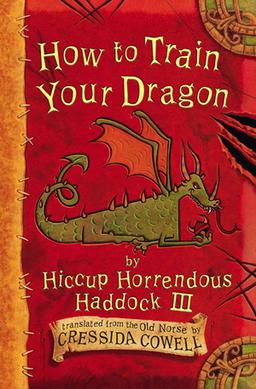
Book Review: How to Train Your Dragon- Hiccup Horrendous Haddock III- Cressida Cowell


     I don't remember when I discovered that the movie was based off a book, but I know that I immediately looked into finding the audiobook and it sat waiting to be listened to for quite a while.  Anyway, this should come as no surprise, but the movie is only very loosely based off the book.  Secondly, this is one of those rare times where the movie tops the book.  Although, admittedly the movie was much more predictable than the book because it follows such classic/traditional story lines.

     The biggest similarities between the two is the names of people and places and to some extent the end where a big dragon is battled [although it is two in the book] and how Hiccup and his dragon go through that battle.  Almost everything else is different.  The book started with the youth attempted to catch a dragon to bring home and train.  And all of the dragons are small, toothless is less than the length of Hiccup's arm.  Furthermore the dragons are whiny, although this could have been a case of the reader making it worse, because he had a really good whining voice.  The training does not go well for Hiccup and the premise of the book is that he has in his old age written an update to the old "How to Train Your Dragon" book which simply stated "Yell at it" or "Yell at it loudly".

    There are a lot more books in the series, and I've heard rumors that DreamWorks intends to do a lot more movies, but I could leave it.

Monday, August 12, 2013

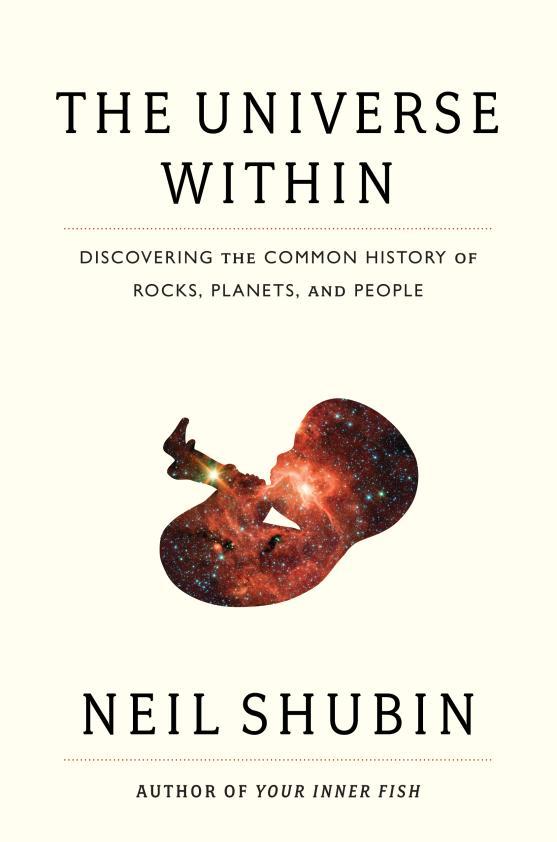
Book Review: The Universe Within: Discovering the Common History of Rocks, Planets, and People- Neil Shubin


This book was a very easy and entertaining read (of course, I listened to it).  Before yesterday I had listened to about 1/8th of the book, then I finished it while doing housework yesterday.  It was hard to put down.  Also, because I was a short book, I see it ending up on my classroom bookshelf soon.

The first half of the book was mostly old hat for me because I read so many science and especially astronomy books.  However, I did learn quite a bit a the book progressed.  There were also a lot of biology connections and back-stories and details that I was unaware of.  I found myself continually thinking that it was refreshing to hear some of this information from the perspective of a biologist/paleontologist.  Some of the connections or analogies were a little bit of a stretch, but overall although the book jumped around a lot the flow was very smooth.

This book kind of helped confirm an idea that I've had for a while, that I like to hear the stories of scientists and listen to their books, but the narrative flows better with journalists and authors who write about science [Mary Roach, Bill Bryson, etc].

The only other complaint I can mention is that the author failed to talked about limitations of our knowledge or about the uncertainty [or error bars] of our knowledge in some of the areas that he presented as strong facts that I think the public/armchair scientist can handle.

Monday, August 5, 2013

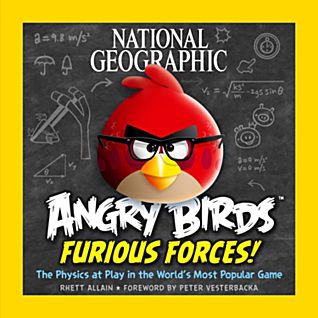
Book Review: National Geographic Angry Birds Furious Forces: The Physics at Play in the World's Most Popular Game- Rhett Allain


Incredibly disappointing.

If I was a real book reviewer, this would be the sound bite from my review for the back cover.  Of course, it wouldn't get published with the book, but then again this book probably should not have been published either.

I bought this book, without previewing it, in fact I think I pre-ordered it by a week or two.  Now I know, of course, that I am not the target audience and I kept this in mind while reading it.  And maybe, I'm too use to Rhett Allain's blog, which is great.  I mean I almost drop everything and find a reason to spend time on the computer or alone with my iPad when he publishes a new article, just so I can read it fast.  He's a nerd after my own heart, a fan of physics in the real-world and virtual-world, a fan of Star Wars, and of xkcd.

I first stumbled across his blog when trying to find details about Felix Bumgardner's "jump from space", and even assigned one blog post to my students as homework, the reading and math and estimation skills were so great.  Like xkcd what-if's he's not afraid to crunch the numbers and guesstimate them when they are not available.  And some of his "homework assignments" have been fun.  He's even done a long series of posts about the real physics of Angry Birds in its many incarnations (in chronological order):

That's 22 23 posts over the last four years, and that's if I managed to dig all of them up (I may have missed some).  And starting with his preemptive review, except the two Angry Birds Stars Wars, I think he gives a very false perception of what the book is about.  Now, because I think this book is a "ride the bandwagon" attempt to cash-in on the Angry Birds franchise, and because he was approached by National Geographic & Rovio about doing the book, I don' think this is all his fault.  Those last few blog posts even have try this at home experiments which he mentions are in the "Physics at Play" sections of the book.  It turns out those sections are about two sentences at the bottom of some pages and there is very little guidance.  In the videos he does on those posts [which I saw on YouTube before Dot Physics because I'm subscribed to his channel there] he does some experiments with one of his daughters (slightly older than my own I'd guess) and they have it setup fairly rigorously with household supplies and several variables that can be tested.  There is no guidance like this from the book though.

Instead of being the Physics of Angry Birds this book is really just an overview of some of the fundamental concepts and some of the technology applications of the basics of physics.  The book includes sections on Mechanics, Waves (Sound & Light), Thermodynamics, Electricity & Magnetism, and Particle Physics (and Beyond).  Outside of Mechanics there is very little application to Angry Birds.  Each section was 30 pages.  The basic layout of a section was a two-page spread title, 2 two-page spreads over-viewing the physics topic, and then 10 more page pairs, where one page had a physics topic and the other had a full-page photo that was loosely related to the topic.  And there was a smattering of Angry Bird characters over the pages to somehow tie in Angry Birds.  Often at the bottom of one or both pages there was some extra physics facts, or the occasional try this at home blurb.
An example page from Furious Forces!
Image CreditNational Geographic

Also, each section had 2 two-page spread Angry Bird character bios, cutting into the physics content.

Profile Page for Matilda, the explosive-egg-dropping bird.
Image CreditNational Geographic

The book was very loosely organized and had little to do with the physics of the game.  And the worst part is, is that there were plenty of places where the game play could have been brought in and it wasn't.

I knew that the book wouldn't be as good as his posts, but I kind of hoped that there would at least be a guided- Here's How to Setup an Experiment and Collect Data in Angry Birds the Game, don't have the app? then download a free version (like Angry Birds for Google Chrome or Facebook), or setup a similar at home simulation.  Instead the book really was just a cash-in on the Angry Birds franchise and sell a book that had little to do with the game and almost nothing to do with the physics of the game.

It is not a bad overview of physics, but there are a lot of distractions and some topics that I would swap out with others.  It is a great late elementary to early junior high summary of physics, with most of the key concepts and almost no math (some equations are mentioned, but I think only the speed or distance equation is used).  One thing the book is not is the physics of Angry Birds.  I just wish there was an easier way than reselling to book to get my money back.  I rarely buy a book sight unseen and I certainly paid a high price for that this time.

PS: Not only did Rhett's own blog posts mislead me as to the content and rigor of the book, but so did the review by PhysicsBuzz (from where I borrowed the two above page spreads).